You felt it on vacation. Three days by the sea and you slept like a different person.
Your energy came back. Your mood lifted. You assumed it was relaxation.
It wasn't. It was light.
The right wavelengths, at the right times, for the first time in months.
Then you went back to the office. And it faded.
What if you could understand exactly why that happened — and keep it?
The Science of Sunlight × Human Biology
One Star.
Every System.
Sunlight is not one signal. It's six wavelength bands — UVB, UVA, blue, green, red, and near-infrared — each activating different biological systems at different times of day. Different depths. Different pathways. Different hours. This is what each one does, when it matters, and what to do tomorrow morning.
The frame that changes everything
We spent 100 years learning that food isn't just calories — it's vitamins, minerals, macronutrients, timing, and individual response. An entire industry was built on that insight.
We're at the very beginning of the same journey with light.
Right now, we treat light the way we treated food in the 1920s — as one thing. Bright or dark. Enough or not enough. But light is a spectrum of biological inputs, each with its own function, its own optimal timing, and its own dose-response curve. The person who builds the nutrition label for light builds the next wellness platform.
2B+
years of evolution under sunlight
10+
biological systems regulated
93%
of time modern humans spend indoors
The Solar Spectrum
UVBUVABlueGreenRedNIR
01
What each wavelength does — and what you feel
Each band of the solar spectrum triggers distinct biological pathways. Here's the science, and here's what it means for your daily life.
UVB
280–315 nm
Skin
Vitamin D₃ synthesis (cholecalciferol)
Immune
T-cell regulation & antimicrobial peptides
Bones
Calcium absorption & bone mineralization
DNA
Urocanic acid isomerization → immunomodulation
Peaks at solar noon. At higher latitudes in winter, UVB is spectrally filtered out entirely.
1 billion people globally have inadequate vitamin D — not from lack of sun, but from lack of the right wavelength at the right time.
What you feel
Stronger bones and fewer fractures as you age
Fewer colds, faster recovery from illness
Less seasonal fatigue and muscle weakness
Reduced risk of autoimmune flare-ups
UVA
315–400 nm
Cardiovascular
Nitric oxide release from skin stores → vasodilation → lower blood pressure
Circulation
Improved blood flow to organs including thyroid, brain, muscles
Metabolic
Reduced arterial stiffness independent of temperature
Skin
Melanin production (photoprotection)
Present throughout daylight hours. Strongest benefit in morning exposure window.
A single UVA exposure vasodilates arterial vasculature and lowers blood pressure — independent of heat or vitamin D.
What you feel
Lower resting blood pressure
Warmer hands and feet — better peripheral circulation
Faster post-exercise recovery
Long-term reduced cardiovascular disease risk
Blue Light
460–490 nm
Brain (SCN)
Circadian clock entrainment via ipRGC photoreceptors
Pineal
Melatonin suppression → wakefulness signal
Adrenal
Cortisol awakening response calibration
Thyroid (HPT)
SCN → TRH → TSH pulsatile rhythm regulation
Critical in the first 1–2 hours after waking. Harmful when received after sunset.
The 2017 Nobel Prize in Medicine was awarded for discovering the molecular mechanisms controlling circadian rhythm — driven by light.
What you feel
Waking up alert without needing caffeine to function
Falling asleep faster and staying asleep
Stable energy throughout the day — no 3pm crash
Better thyroid function and metabolic regulation
Green–Yellow
500–580 nm
Visual cortex
Peak photopic sensitivity — sharpest visual acuity
Mood
Serotonin pathway modulation
Cognitive
Sustained attention and alertness
Circadian
Contributes to melanopic lux for daytime circadian benefit
Abundant in natural daylight throughout the day. Underrepresented in most indoor LED lighting.
Daylight delivers 10,000–100,000 lux. A typical office provides 300–500 lux. The gap is biological, not just perceptual.
What you feel
Better mood — less winter blues and irritability
Sharper focus and longer attention spans
Feeling genuinely awake — not just stimulated
Reduced eye strain compared to pure LED environments
Red
620–700 nm
Mitochondria
Cytochrome c oxidase absorption → ATP production boost
Cellular
Reduced oxidative stress & inflammation
Skin
Enhanced wound healing and collagen synthesis
Neural
Neuroprotective effects — retinal and cognitive
Dominant in the golden hour. Present throughout daylight but enriched at dawn and dusk.
Glen Jeffery (UCL) showed that 670nm light improves declining mitochondrial function — even through clothing.
What you feel
More physical energy — less unexplained fatigue
Healthier skin — visible glow, faster healing
Better vision — especially in low-light conditions
Reduced joint stiffness and chronic inflammation
Near-Infrared
700–1000 nm
Deep tissue
Penetrates 2–3 cm — reaches muscle, joint, organ tissue
Mitochondria
Stimulates electron transport chain complex IV
Inflammation
Systemic anti-inflammatory signaling
Circulation
Melatonin synthesis in mitochondria (subcellular melatonin)
50% of solar energy is NIR. Indoor environments are almost entirely devoid of it.
NIR represents half of the sun's energy output. LEDs produce essentially zero. The mismatch is massive.
What you feel
Faster muscle recovery after exercise
Less chronic pain and body stiffness
Deeper, more restorative sleep quality
A sense of calm — subcellular melatonin at work
02
When it matters
The same sun delivers different biological instructions throughout the day. Timing isn't secondary — it's the signal.
🌅
Dawn6:00–8:00
Cortisol rise. Circadian clock reset. Nitric oxide release begins. Mitochondria start charging.
RedNIRUVA
☀️
Morning8:00–11:00
Peak circadian entrainment. SCN fully activated. HPT axis calibrated. Serotonin synthesis.
BlueGreenUVARed
🔆
Solar Noon11:00–14:00
Vitamin D synthesis window. Peak UVB intensity. Maximum melanopic stimulus.
UVBUVAFull spectrum
🌤️
Afternoon14:00–17:00
Sustained energy. Anti-inflammatory signaling. Circadian wind-down preparation.
GreenRedNIR
🌇
Golden Hour17:00–sunset
Blue light naturally diminishes. Melatonin gates open. Mitochondrial repair cycle begins.
RedNIRAmber
03
The winter revelation
In a Portuguese winter — despite 300 days of sunshine — UVB is filtered out entirely by the atmospheric angle. Your skin cannot synthesize vitamin D regardless of how long you stay outside.
But UVA still reaches you. So does red and near-infrared. Meaning winter sun is a cardiovascular day, not a vitamin D day. The instruction set changed. Without measurement, you'd never know.
This is why two in three Portuguese (66.6%, Duarte et al. 2020) are vitamin D deficient despite living under one of Europe's sunniest skies. The sun didn't disappear. We just stopped understanding what it was saying.
04
The mismatch
One input regulates every major biological system. And we've been engineering it out of our lives.
☀️ Natural Sunlight
✓Full spectrum: UV through NIR
✓10,000–100,000 lux
✓Dynamic — shifts throughout the day
✓50% near-infrared energy
✓Circadian-calibrated intensity curve
✓Context: latitude, season, altitude
💡 Indoor LED Lighting
✗Narrow spectrum: blue spike + phosphor
✗300–500 lux
✗Static — same all day
✗Zero near-infrared
✗No circadian modulation
✗No biological context
We optimized indoor lighting for visual acuity and energy efficiency.
Nobody asked what we were losing biologically.
05
What to do tomorrow
The science above translates into three daily habits. Simple. Free. Immediately actionable.
Morning
15–30
minutes outdoor light
Within the first hour of waking. Entrains circadian clock, triggers cortisol rise, starts nitric oxide release.
Midday
10–15
minutes around solar noon
For vitamin D synthesis. Varies by skin type, latitude, and season. In winter at higher latitudes, UVB may be absent entirely.
Evening
Limit
artificial light after sunset
Allow melatonin gates to open. Dim screens. Let the circadian system wind down as evolution designed it.
But here's the problem
These guidelines are averages. Your skin type changes your vitamin D synthesis rate. Your latitude determines whether UVB reaches you at all. Your age affects lens transmission. Your chronotype shifts your optimal windows. Your season changes everything.
The "right" light prescription is different for every human, every day, in every location. That's why general advice can only go so far — and why personal, real-time measurement isn't a luxury. It's the only way to actually get this right.
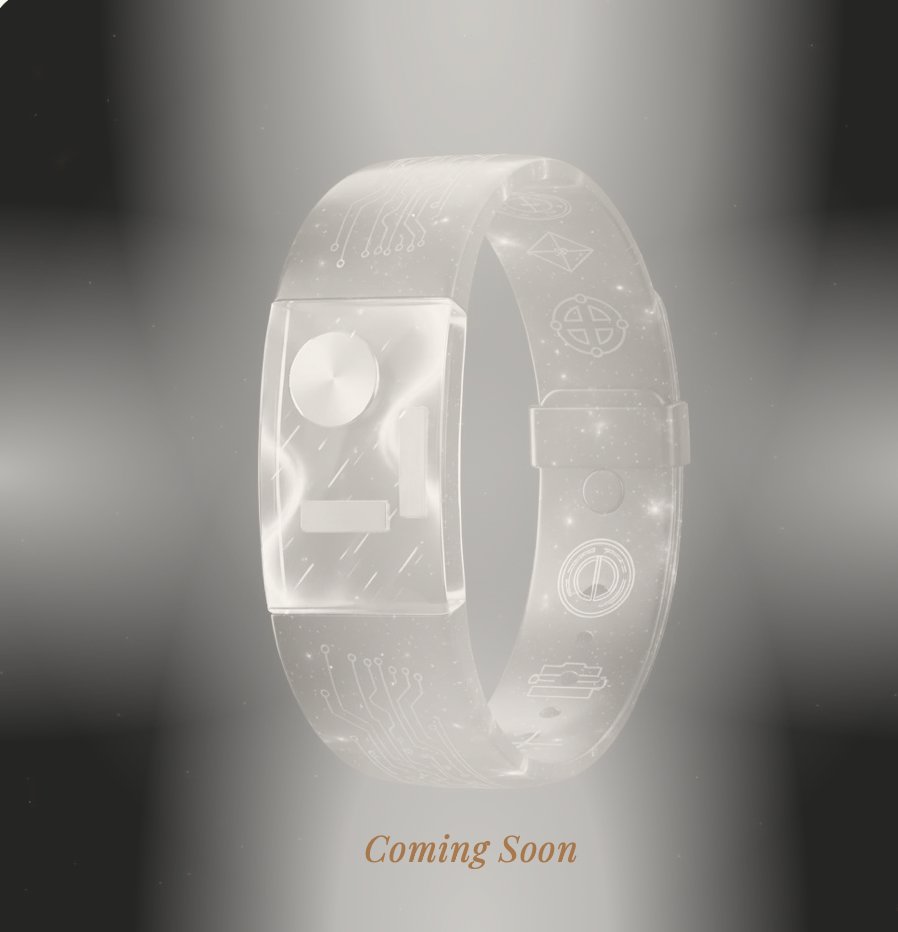
The answer, made physical
A measurement layer
for your relationship with the sun.
Not another fitness tracker. A window into the most powerful force in nature,
translated into personal, real-time guidance.
06
How you know it's working
Knowing the science is one thing. Seeing it in your own life is another. Three layers of proof — from day one to season one.
1
Day 1
The Score — behavioral proof
You don't need to feel healthier on day one. You need to see that you DID something — and that it has a number attached to it. A daily light optimization score works the same way step counting did: nobody felt fitter after 10,000 steps on a Tuesday. But the number created a behavioral loop. Do the thing, see the score, feel agency. The biology compounds underneath while the habit locks in above.
What the user sees
"Your light score today: 72/100. You got 24 minutes of morning outdoor light and hit your midday vitamin D window. Tomorrow, try to get outside before 9am to reach 80."
▼
2
Month 1
The Correlation — the explanation layer
Every wearable user already has downstream data: sleep quality, HRV, resting heart rate, energy levels. What they don't have is WHY those numbers move. This is where light optimization becomes the missing variable that explains everything else. By connecting with the devices users already wear, light exposure becomes the upstream cause that their existing wearables have been measuring the downstream effects of — without ever knowing it.
What the user sees
"On days when you got 20+ minutes of morning light before 9am, your deep sleep averaged 23% longer and your HRV was 8 points higher. Your afternoon energy crashes dropped by 40% in weeks where your light score exceeded 65."
▼
3
Season 1
The Record — your light biography
No one has ever shown a person their light history across seasons. This is where the data becomes undeniable and deeply personal. Your own before-and-after, measured not by how you remember feeling, but by what your body actually received. Winter is when people feel the deficit most — and it's when the gap between guided and unguided behavior is widest. The seasonal comparison is the most powerful proof mechanism there is.
What the user sees
"Last winter, you averaged 12 minutes of outdoor light per day. Your light score averaged 28. You had zero UVB-eligible days between November and March. This winter, with guidance, you've averaged 34 minutes of optimal-window outdoor time. Your score averages 61. Your vitamin D went from 18 ng/mL to 42 ng/mL."
The proof is a behavioral loop on day one, a correlation engine by month one, and a personal light biography by season one.
The longer someone wears it, the more undeniable the proof becomes — which is also why they'll never take it off.
This framework is being developed in collaboration with clinical investigators at a university hospital dermatology department, in preparation for a randomized controlled trial submitted for ethics review.
07
The evidence base
1
Weller, Liu et al. (2014)
UVA irradiation of human skin vasodilates arterial vasculature and lowers blood pressure independently of temperature or vitamin D.
Journal of Investigative Dermatology
2
Jeffery et al. (UCL)
670nm light absorbed by cytochrome c oxidase in mitochondria improves declining function — penetrates tissue including through clothing.
Institute of Ophthalmology, UCL
3
Nobel Prize 2017 — Hall, Rosbash, Young
Molecular mechanisms controlling circadian rhythm — the internal clock entrained by light via the retinohypothalamic tract.
Nobel Committee for Physiology or Medicine
4
Stone et al. (2026)
Daytime light exposure identified as a universal circadian benefit — independent of nighttime behavior.
Emerging circadian research
5
Lindqvist et al. (MISS Cohort)
Sun avoidance carries a mortality risk comparable to smoking. All-cause mortality decreased with increasing sun exposure.
Journal of Internal Medicine
6
AHA / Knutson et al. (2025)
Scientific statement establishing circadian health as a key factor in cardiometabolic disease risk.
American Heart Association
Light is not a lifestyle accessory.
It's a biological operating system.
We tracked steps. We tracked sleep. We never tracked the one input that governs both — and everything else.
The Third Wellness Revolution
Ready to measure your own light?
Join the waitlist. The first bands ship to the people who join early.
Join the waitlist →
 Eclipsia is an official UC Spin-Off, recognized by the University of Coimbra.